How to Control Emotions in Trading: Fear, Greed, Revenge Trading & Overtrading
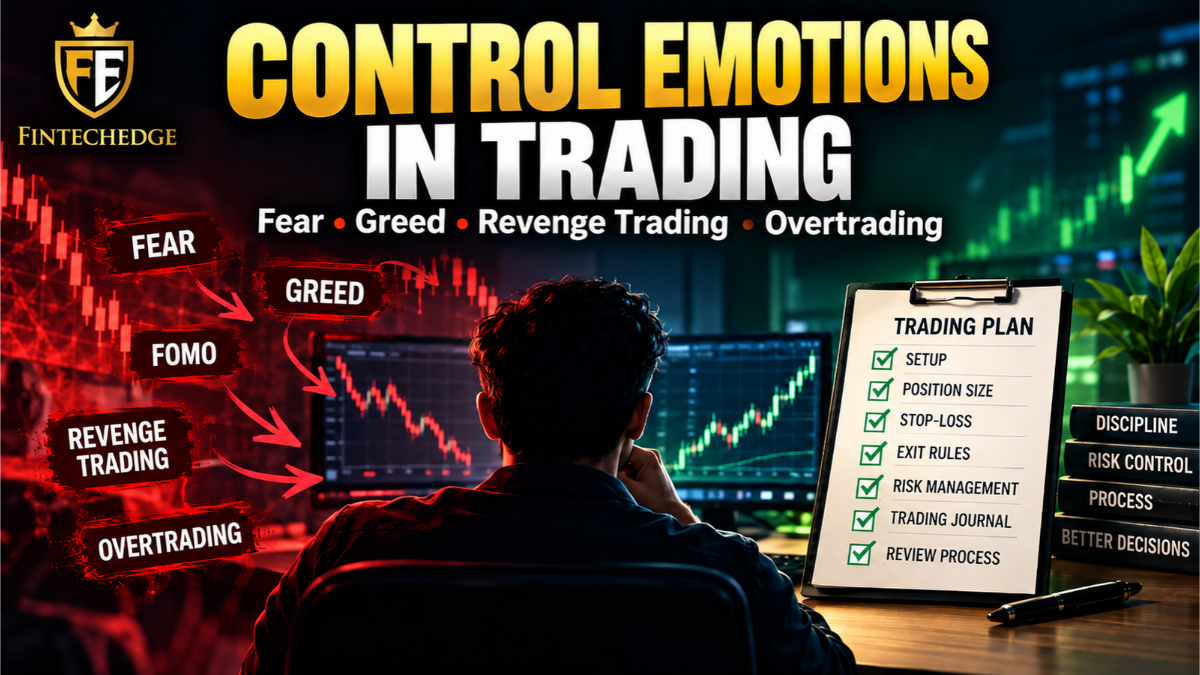
How to control emotions in trading is less about eliminating fear, greed or frustration and more about building rules that stop those emotions from changing your trading decisions in real time.
A trader has a written plan. The setup says risk ₹1,000. The first trade loses, and frustration starts to build. Instead of waiting for the next valid setup, the trader enters again immediately, increases position size, or loosens the stop-loss.
Nothing about the original trading strategy necessarily changed. What changed was the decision-making process.
Trading psychology is not about removing emotions.
It is about building rules that stop emotions from changing your trading plan in real time.
The goal is not to become emotionless.
The goal is to create a process that still works when fear, greed, frustration, FOMO or the urge to recover a loss appears.
Quick Summary
- Emotions are normal; the real problem starts when fear, greed, FOMO or frustration changes the trading plan.
- Revenge trading and overtrading often happen when traders try to recover losses quickly or act without waiting for a valid setup.
- Predefined risk and position size can reduce emotional pressure and make rule-breaking less likely.
- A written pre-trade checklist, trading plan and post-trade review can make impulsive decisions harder to execute.
- Judge trading quality by process and rule-following, not only by whether one trade made or lost money.
What Is Trading Psychology?
Trading psychology refers to the emotional and behavioural factors that influence trading decisions.
These can include:
- fear
- greed
- frustration
- impatience
- overconfidence
- FOMO
- the urge to recover losses quickly
These emotions are not automatically bad.
Feeling nervous before entering a trade is normal.
Feeling disappointed after a loss is also normal.
The problem begins when those emotions start changing the trading plan.
A useful distinction is:
Emotion = normal
Emotional decision outside the plan = problem
Why Do Traders Break Their Own Rules?
Many traders already know what they should do.
They may know:
- where the stop-loss should be
- how much they should risk
- what setup they are waiting for
- how large the position should be
- when to stop trading for the day
Yet they may still break those rules once money is at risk.
Common reasons include:
- wanting to avoid taking a loss
- refusing to admit that a trade is wrong
- trying to recover losses quickly
- fear of missing the next move
- overconfidence after a winning trade
- frustration after repeated losses
- risking too much money
- making decisions without a predefined process
Loss aversion can also play a role: losses can feel more painful than equivalent gains feel rewarding.
But no single behavioural concept explains every trading decision.
In practice, two of the most useful things a trader can control are:
risk and process.
Fear in Trading: What Does It Look Like?
Fear does not always look like panic.
It often appears through small changes in behaviour.
Fear of Losing
This may show up as:
- skipping valid setups
- reducing size inconsistently
- exiting too early
- placing stops too close
The trader is no longer following the system consistently because avoiding a loss becomes more important than executing the plan.
Fear After a Losing Streak
A few consecutive losses can make a trader hesitate.
They may:
- stop taking valid setups
- second-guess every entry
- abandon a tested strategy too quickly
Three losing trades do not automatically prove that a strategy has stopped working.
Giving too much importance to the most recent outcomes is often described as recency bias.
Fear of Giving Back Profit
Fear can also appear when the trade is profitable.
The trader sees open profit and starts thinking:
“What if this disappears?”
This can lead to:
- exiting winners too early
- tightening stops without a rule
- reducing targets impulsively
The answer is not to ignore risk.
The answer is to define exit logic before entering the trade.
Greed in Trading: More Than Wanting Profit
Greed in trading is not simply wanting to make money.
Wanting profit is the reason people trade.
The problem starts when the desire for more profit causes the trader to abandon the plan.
Examples include:
- increasing position size after a win
- extending targets without a rule
- taking extra trades after the planned session should be over
- refusing to exit because “it can go higher”
- using excessive leverage
- chasing unusually large returns
The important question is not:
“Did the trade make money?”
It is:
“Did I follow the rules I had before the trade?”
What Is Revenge Trading?
Revenge trading is taking trades mainly to recover a recent loss rather than because a valid setup exists.
It is a behaviour pattern, not a medical diagnosis.
A typical revenge-trading cycle looks like this:
Loss
↓
Frustration
↓
Urgency to recover
↓
Poor-quality trade
↓
Larger loss
↓
More emotional pressure
Revenge trading often involves:
- entering faster than usual
- accepting weaker setups
- increasing position size
- ignoring stop-loss rules
- taking repeated trades
A useful principle is:
The market does not know how much you lost and does not owe you a recovery trade.
How to Stop Revenge Trading
Rule 1 — Predefine Maximum Loss Per Trade
Decide the amount you are willing to lose before entering.
That can be defined in rupee terms or as part of a broader risk framework.
There is no universal percentage that is correct for every trader.
The important point is:
risk is decided before the trade, not after the loss starts hurting.
Rule 2 — Set a Daily Loss Limit
A daily loss limit creates a point where trading stops for the session.
The exact number depends on the trader’s capital, strategy and risk plan.
The purpose is to stop a bad trading day from becoming uncontrolled.
Rule 3 — Pause After a Loss
After a loss:
- step away from the screen
- record the trade
- check whether the setup was valid
- check whether the plan was followed
- return only when another valid setup appears
The exact length of the pause matters less than having a rule for it.
Rule 4 — Never Increase Size to Recover
Increasing position size after a loss changes the risk profile at the moment the trader is emotionally most vulnerable.
If the previous trade lost ₹1,000, that does not make the next setup better.
Rule 5 — Separate Recovery From Opportunity
The next trade should exist because the setup exists.
Not because the trader wants the previous loss back.
What Is Overtrading?
Overtrading means taking more trades than the strategy or trading plan justifies.
Common causes include:
- boredom
- frustration
- trying to recover losses
- excitement after winning
- FOMO
- watching every small price move
- believing that more activity means more productivity
It does not.
More trades do not automatically mean more edge.
The number of trades that counts as “too many” depends on the strategy.
For one system, five trades may be normal.
For another, five trades may already be excessive.
So overtrading should be judged against the trader’s own plan.
How to Reduce Overtrading
Possible controls include:
- clearly define which setups are tradable
- set a maximum number of trades per day if appropriate for the strategy
- use alerts instead of watching every tick
- use a checklist before every entry
- stop when the daily risk threshold is reached
- mark unplanned trades separately in the journal
The goal is not to create unnecessary restrictions.
The goal is to make it harder to trade without a valid reason. Pasted text
FOMO in Trading
FOMO means Fear of Missing Out.
In trading, it often appears when price has already moved sharply and the trader feels pressure to participate.
Examples include:
- buying after a large move has already happened
- chasing breakout candles
- entering because other traders are discussing the move
- entering without a proper stop because “it may keep running”
FOMO changes the trader’s question.
Instead of asking:
“Does this trade meet my setup?”
the trader starts asking:
“What if it moves without me?”
That shift is important.
Urgency can also cause traders to ignore execution factors such as bid-ask spread, liquidity and market depth.
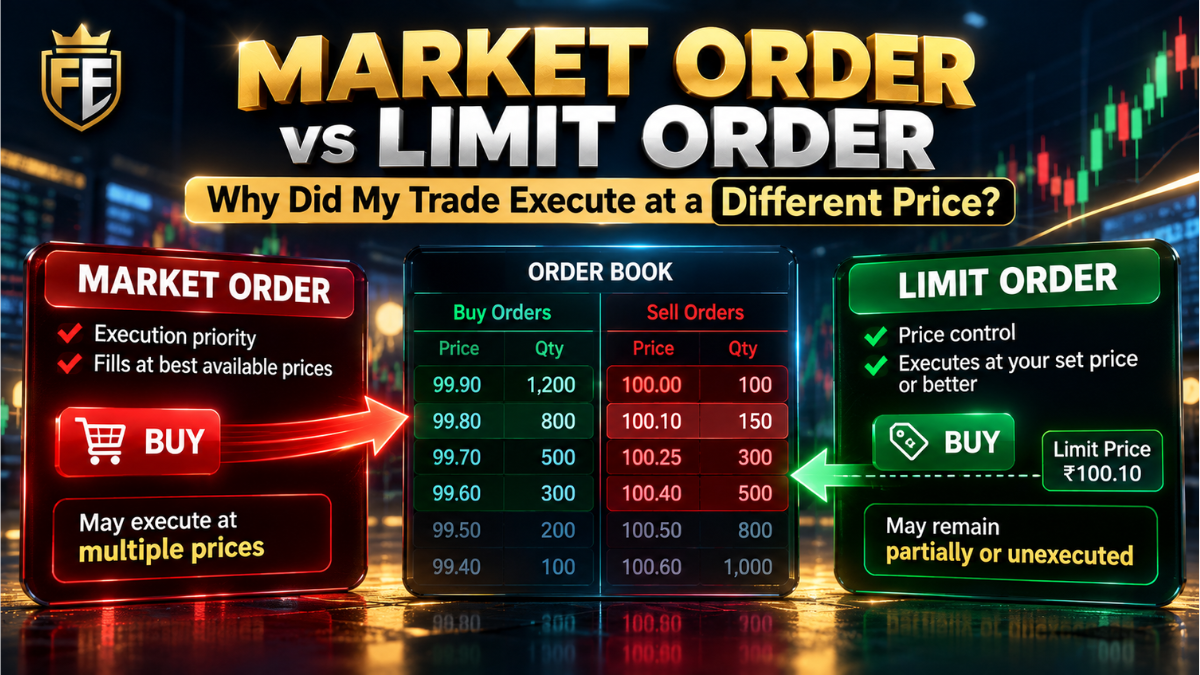
For a deeper explanation of order execution, see Market Order vs Limit Order: Why Your Trade May Execute at a Different Price.
How to Reduce FOMO
Accept That Missed Trades Are Normal
No trading system captures every move.
Missing a trade is not automatically a mistake.
Define Entry Conditions Before the Move
The entry conditions should already exist before the market starts moving quickly.
If the criteria are not met, there is no trade.
Do Not Rewrite the Setup After Price Runs Away
If the original entry no longer exists, changing the rules just to participate defeats the purpose of having a system.
Track FOMO Trades
In your journal, ask:
- Was the setup valid?
- Was the entry planned?
- Did I chase the move?
- Was the spread wider than usual?
- Was there slippage?
- Did I break my risk rules?
Patterns become easier to fix once they become visible.
Why Traders Move Their Stop-Loss
Moving a stop-loss is often emotional rather than technical.
Possible reasons include:
- refusing to accept a loss
- believing price will eventually reverse
- wanting to avoid being wrong
- sunk-cost thinking
- position size that feels too large
But there is an important distinction.
Moving a stop is not always wrong.
Some strategies use predefined stop-management rules, such as trailing a stop after price moves in the trader’s favour.
The problem is:
Changing the stop emotionally after entry without a rule that existed before the trade.
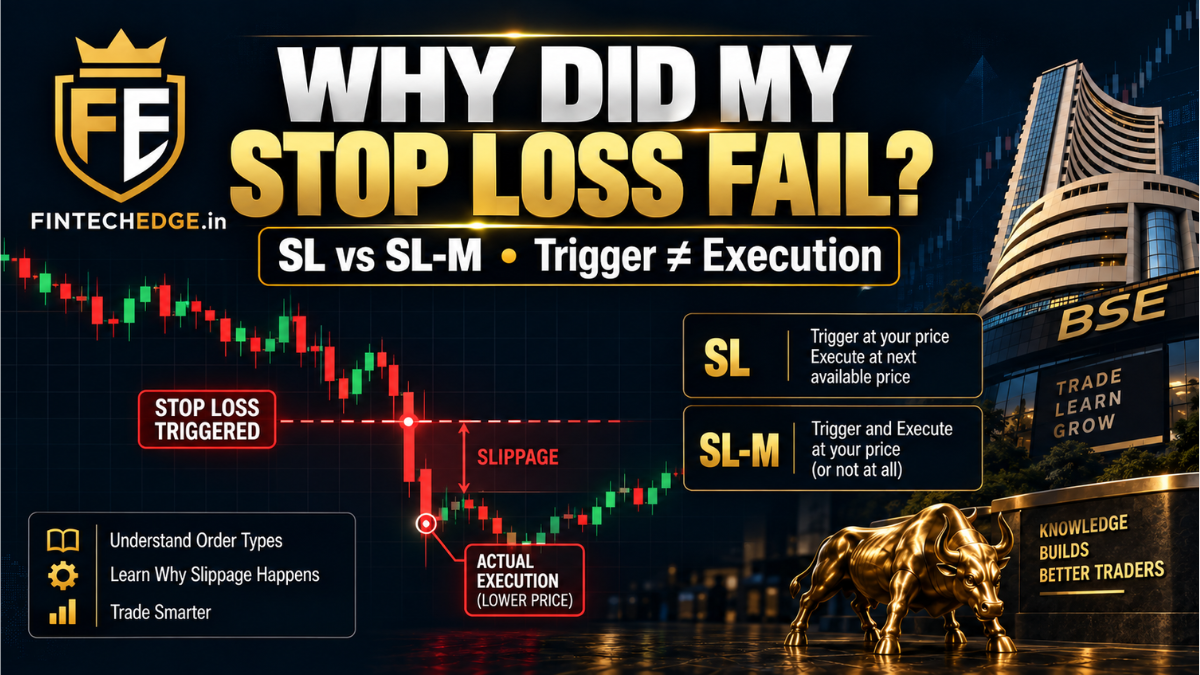
For more on how stop orders behave after triggering, see Stop-Loss Triggered but Not Executed? SL vs SL-M Explained.
Why Traders Exit Winners Too Early
Open profit creates a different type of emotional pressure.
As the unrealised profit grows, the trader can begin treating it as money already owned.
Then a small pullback feels like a loss.
That can lead to premature exits.
This matters particularly in strategies where:
- losses are predefined
- winners need room to develop
- larger winners compensate for losing trades
The answer is not:
“Always hold until target.”
The better principle is:
Define the exit logic before entering the trade.
Position Size and Trading Psychology
Position sizing is often discussed only as a risk-management tool.
But it also has a psychological effect.
When the financial risk feels too large, emotional control becomes harder.
A trader may:
- stare at every tick
- move the stop-loss
- exit winners too early
- hesitate to enter valid setups
- revenge trade after a loss
That leads to an important principle:
Position sizing is not only a risk-management tool; it is also a behavioural-control tool.
Risk should be defined before the trade and should fit the trader’s overall risk plan.
There is no universal risk percentage that works for everyone.
Smaller risk may reduce emotional pressure, but it does not automatically create discipline.
Risk control comes before emotional control.
The Pre-Trade Checklist
Before entering a trade, ask:
- Is this a valid setup according to my written plan?
- Where is the invalidation or stop level?
- How much am I risking?
- Was the position size calculated before entry?
- What is the planned exit logic?
- Am I entering because of the setup, or because of FOMO or revenge?
- Have I already reached my daily risk or loss limit?
- Are liquidity and spread acceptable for this trade?
If these questions cannot be answered before entry, the trade is not fully planned.
What to Do During a Trade
Once a position is live:
- do not change rules because of P&L alone
- follow predefined stop and exit conditions
- do not add size unless the strategy specifically allows it
- do not widen the stop because taking the loss feels uncomfortable
- avoid staring at P&L if doing so causes impulsive behaviour
This does not mean a trade should never be managed.
The distinction is:
Planned management vs emotional management
If the management rule existed before entry, it is part of the system.
If it appears only because the trader is afraid, frustrated or greedy, that is different.
The Post-Trade Review
A useful trading review separates two things:
Outcome
Did the trade make or lose money?
Process
Did the trader follow the plan?
That creates four possible outcomes.
Good Trade + Profit
The plan was followed and the trade made money.
Good Trade + Loss
The plan was followed but the trade lost money.
This can still be a correctly executed trade.
Bad Trade + Profit
The rules were broken, but the market rewarded the mistake.
Bad Trade + Loss
The rules were broken and the trade lost money.
The key lesson is:
A good decision can lose money, and a bad decision can make money.
Judging a decision only by the outcome is often described as outcome bias.
A profitable rule-breaking trade is still a bad process.
Why One Winning Trade Can Be Dangerous
A profitable bad trade can be psychologically dangerous because it rewards the wrong behaviour.
Examples:
- revenge trading makes money
- an oversized position works
- a moved stop eventually recovers
- a FOMO trade succeeds
The trader may conclude:
“My instinct was right.”
But one profitable result does not prove the behaviour was sound.
It may simply reinforce a risky habit.
Recent wins can also increase overconfidence and make the trader feel that their judgment is more reliable than it actually is.
Trading Journal: Track Behaviour, Not Just P&L
A trading journal should record more than profit and loss.
Trade Data
Record:
- setup
- entry
- stop
- target or exit
- position size
- result
Behaviour Data
Also record:
- Did I follow the setup?
- Did I follow the planned position size?
- Did I move the stop?
- Did I revenge trade?
- Did I chase because of FOMO?
- Was the trade planned?
- What was my emotional state before entry?
- Which rule did I break?
You can also use a simple illustrative process score.
For example:
| Process Check | Score |
|---|---|
| Setup followed | 25 |
| Risk followed | 25 |
| Exit plan followed | 25 |
| No emotional rule-breaking | 25 |
| Total | 100 |
This is not a scientifically validated scoring system.
Its purpose is simply to make rule adherence measurable.
Process Goals vs P&L Goals
A P&L goal might say:
“I need to make ₹5,000 today.”
A process goal says:
“I will take only valid setups and respect predefined risk.”
There is nothing inherently wrong with having financial goals.
But forcing trades because a daily profit number has not been reached can increase pressure and encourage unnecessary trading.
The market does not provide the same opportunities every day.
The trader controls the process, not the amount the market must deliver.
How to Build a Trading Psychology System
A trading psychology system should exist across the entire trading day.
Before the Market
- review the trading plan
- define risk limits
- identify valid setups
- prepare the watchlist
- note important events if relevant
Before Each Trade
- run the checklist
- calculate position size
- define stop
- define exit logic
- write down the reason for entry
During the Trade
- follow the predefined management rules
- avoid emotional changes
After Each Trade
- record the outcome
- record whether rules were followed
- pause if emotionally activated
End of Day
- review the process
- identify rule-breaking
- do not judge the trading system from one day
Weekly Review
Look for recurring patterns:
- How often did you revenge trade?
- How often did you move stops?
- How often did you take unplanned setups?
- How often did you increase size emotionally?
- What situations caused FOMO?
Then build controls around those specific behaviors.
Example: From Revenge Trading to Process Control
Suppose a trader loses ₹1,000 on the first trade.
Emotional Response
The trader becomes frustrated.
They immediately enter another trade.
They double the size.
The second setup is weak.
The trade loses ₹3,000.
Total loss:
₹4,000
Process-Based Response
The first trade loses the predefined ₹1,000.
The trader:
- records the trade
- checks whether the setup was valid
- waits for another qualified setup
- does not increase position size
- stops trading if the daily risk limit has been reached
This process does not guarantee that the next trade will win.
That is not the purpose.
The purpose is to stop one normal loss from turning into uncontrolled risk.
Common Trading Psychology Mistakes
1. Trying to Eliminate Emotion Completely
Emotions are part of decision-making.
The goal is not to become emotionless.
2. Treating Discipline as Pure Willpower
Willpower can help, but systems, checklists and limits reduce the number of decisions that have to be made emotionally.
3. Risking Too Much and Then Blaming Psychology
Oversized risk naturally increases emotional pressure.
4. Changing Strategy After a Few Losses
A small sample of losses does not automatically prove that the strategy has stopped working.
5. Judging Decisions Only by P&L
A winning trade can involve poor execution.
A losing trade can involve perfect execution.
6. Increasing Size to Recover Losses
This changes risk at the moment when the trader is already emotionally affected.
7. Taking More Trades Because the Day Is Red
More trading does not guarantee recovery.
8. Treating One Profitable Rule-Breaking Trade as Validation
A lucky outcome can reinforce a bad process.
FintechEdge Trading Psychology Framework
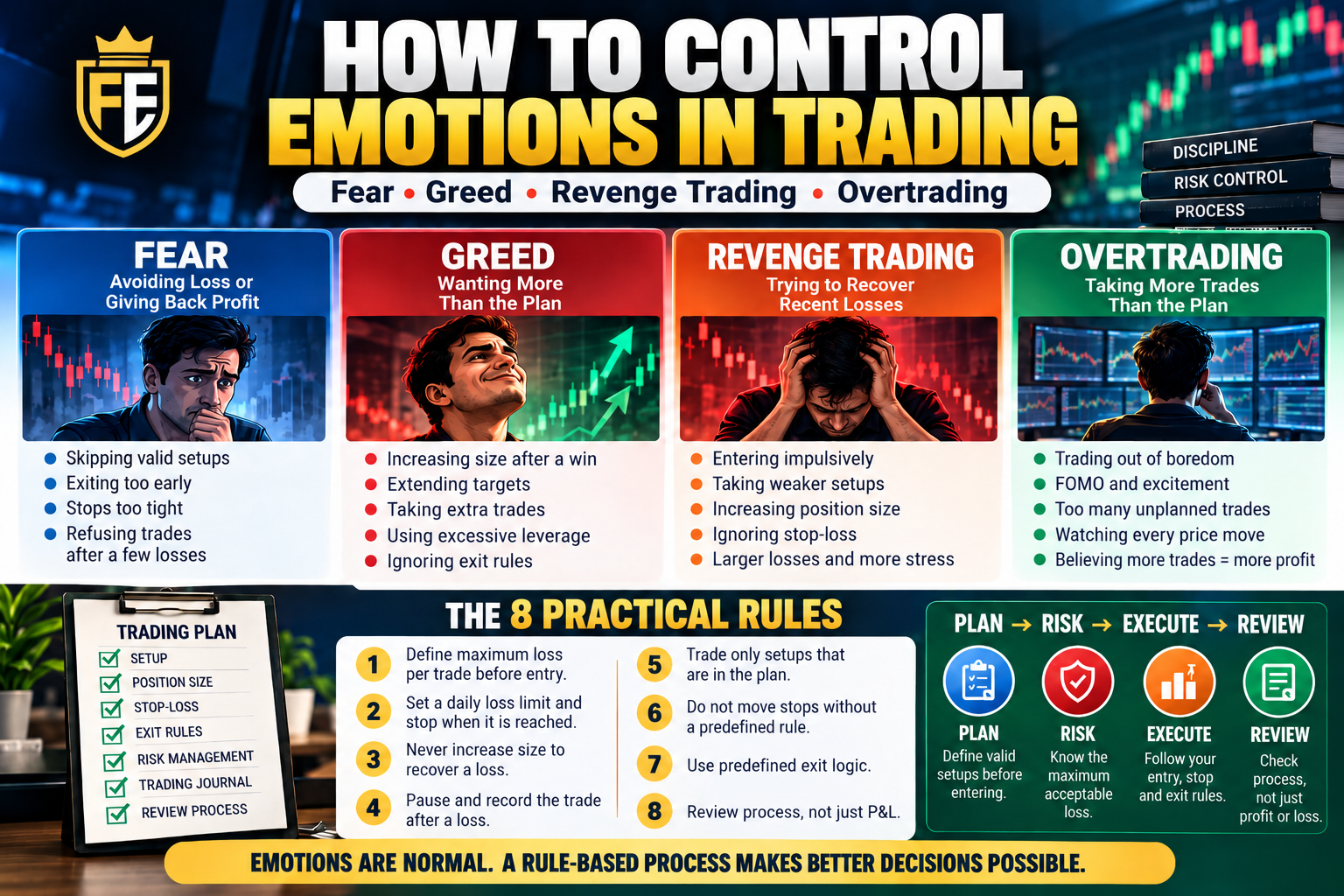
Use this four-step framework:
PLAN → RISK → EXECUTE → REVIEW
PLAN
Define valid setups before entering.
RISK
Know the maximum acceptable loss and position size before the trade.
EXECUTE
Follow predefined entry, stop and exit rules.
REVIEW
Judge the process after the trade separately from profit or loss.
If emotion changes one of these four steps in real time, pause and reassess.
The 8 Practical Rules
- Define maximum loss per trade before entry.
- Set a daily loss limit and stop when it is reached.
- Never increase size to recover a loss.
- Pause and record the trade after a loss.
- Trade only setups that are in the plan.
- Do not move stops without a predefined rule.
- Use predefined exit logic.
- Review process, not just P&L.
Frequently Asked Questions
What is trading psychology?
Trading psychology refers to the emotional and behavioural factors that influence trading decisions, including fear, greed, frustration, overconfidence and FOMO.
How can I control emotions while trading?
Do not try to eliminate emotions completely.
Use predefined rules, risk limits, checklists, position sizing and post-trade review to reduce the number of decisions made impulsively.
What is revenge trading?
Revenge trading is taking trades mainly to recover a recent loss instead of waiting for a valid trading setup.
How do I stop revenge trading?
Predefine per-trade risk, use a daily loss limit, pause after a loss, avoid increasing position size to recover, and wait for the next valid setup.
Why do I overtrade?
Common causes include boredom, frustration, FOMO, excitement after winning and the desire to recover losses quickly.
How do I stop FOMO in trading?
Define your entry conditions in advance, accept that missed trades are normal and do not rewrite the setup simply because price has already moved.
Why do traders move stop-losses?
Common reasons include avoiding a loss, sunk-cost thinking, oversized risk and the hope that price will reverse.
A stop can be changed as part of a predefined strategy; the problem is moving it emotionally without a rule.
Why do I exit winning trades too early?
Fear of giving back open profit can cause early exits.
Predefined exit logic reduces the need to decide emotionally while the trade is active.
Does position size affect trading psychology?
Yes.
If the financial risk feels too large, it can become harder to follow the trading plan consistently.
Smaller risk may reduce emotional pressure, but it does not guarantee discipline.
Can a trading journal improve discipline?
A journal can make repeated rule-breaking visible.
It helps traders identify patterns such as revenge trading, FOMO, oversized positions and unplanned entries.
How do I become a disciplined trader?
Build a written process, define risk before entry, use a checklist, follow predefined trade-management rules and review whether the plan was followed.
Discipline is built through repeatable systems, not motivation alone.
Final Takeaway
Learning how to control emotions in trading does not mean eliminating fear, greed, frustration or excitement.
Those reactions are normal.
The more useful goal is to stop those emotions from changing trading decisions in real time.
That requires structure:
Plan before the trade.
Define risk before the trade.
Execute the rules during the trade.
Review the process after the trade.
The market outcome cannot be controlled.
The next decision can.
That is the foundation of better trading psychology.
Sources & References
- SEBI Investor Education — Risk Appetite and Informed Decision-Making SEBI Investor
- SEBI Investor — Securities Market Education Resources SEBI Investor
- NSE Technical Analysis Module — Trading Psychology and Risk Management NSE India
This article is for educational and informational purposes only and does not constitute investment advice, trading advice or a recommendation to buy or sell any security.
Our content is written for educational purposes and focuses on clarity, evidence, risk awareness and practical decision-making.