Investment Process: 5 Simple Steps to Build a Better Portfolio

A good investment process helps you make decisions with a plan instead of reacting to market noise.
Whether you invest in stocks, mutual funds, ETFs, or other assets, the basic process is similar: define your goal, understand your risk, choose suitable investments, build the portfolio, and review it regularly.

Table of Contents
Here are five practical steps.
1. Define Your Financial Goal
Start by deciding why you are investing.
Common goals include:
- retirement
- buying a home
- children’s education
- building long-term wealth
- creating an emergency or future fund
Your goal should include both an amount and a time horizon.
For example:
Build ₹25 lakh for a long-term financial goal over the next 10 years.
A clear goal makes it easier to decide how much to invest and what level of risk may be appropriate.
2. Understand Your Risk Tolerance
Different investments carry different levels of risk.
Before investing, consider:
- how long you can keep the money invested
- how much volatility you can tolerate
- whether you may need the money unexpectedly
- your income stability
- your existing savings and liabilities
Someone investing for a goal 15 years away may be able to tolerate more short-term market volatility than someone who needs the money next year.
The important point is to avoid choosing investments only because they produced high recent returns.
3. Choose an Asset Allocation
Asset allocation means deciding how your money will be divided between different types of investments.
Examples may include:
- equities
- mutual funds
- ETFs
- fixed-income investments
- cash
- other suitable assets
Diversification can reduce dependence on the performance of a single company, sector, or asset type.
However, diversification does not eliminate investment risk.
Your allocation should reflect your financial goals, investment horizon, and ability to handle losses.
4. Select Investments Carefully
Once the broad allocation is decided, evaluate individual investments.
For stocks, consider factors such as:
- business quality
- revenue and profit growth
- debt
- cash flow
- competitive position
- valuation
For mutual funds and ETFs, consider:
- investment objective
- portfolio composition
- expense ratio
- historical risk
- benchmark
- concentration
- suitability for your goal
Do not choose an investment simply because it is popular or recently performed well.
Understand what you own and why you own it.
5. Monitor and Review Your Portfolio
Investing is not finished after buying.
Review your portfolio periodically to check whether:
- your goals have changed
- your risk tolerance has changed
- your asset allocation has moved significantly
- an investment no longer matches its original purpose
- contributions need to increase
Avoid checking long-term investments every few minutes.
For many investors, periodic reviews are more useful than reacting to every daily market move.
Rebalancing may also be appropriate when one part of the portfolio becomes much larger or smaller than intended.
Common Investment Process Mistakes
A structured process can help reduce mistakes such as:
Chasing recent returns
An investment that performed well recently may not continue to outperform.
Investing without a goal
Without a clear objective, it becomes difficult to judge whether an investment is appropriate.
Taking excessive risk
Higher potential returns usually come with higher uncertainty and downside risk.
Ignoring diversification
Concentrating too much money in one stock, sector, or asset can increase portfolio risk.
Reacting emotionally
Fear during market declines and excitement during rallies can lead to poor decisions.
A Simple Investment Checklist
Before investing, ask yourself:
Goal: What am I investing for?
Time: When will I need the money?
Risk: How much loss or volatility can I realistically tolerate?
Allocation: How should the money be divided?
Selection: Why am I choosing this investment?
Review: How often will I review the portfolio?
If these questions cannot be answered clearly, more research may be needed before investing.
Final Thoughts
A good investment process is less about predicting the next market move and more about making consistent decisions.
The basic framework is:
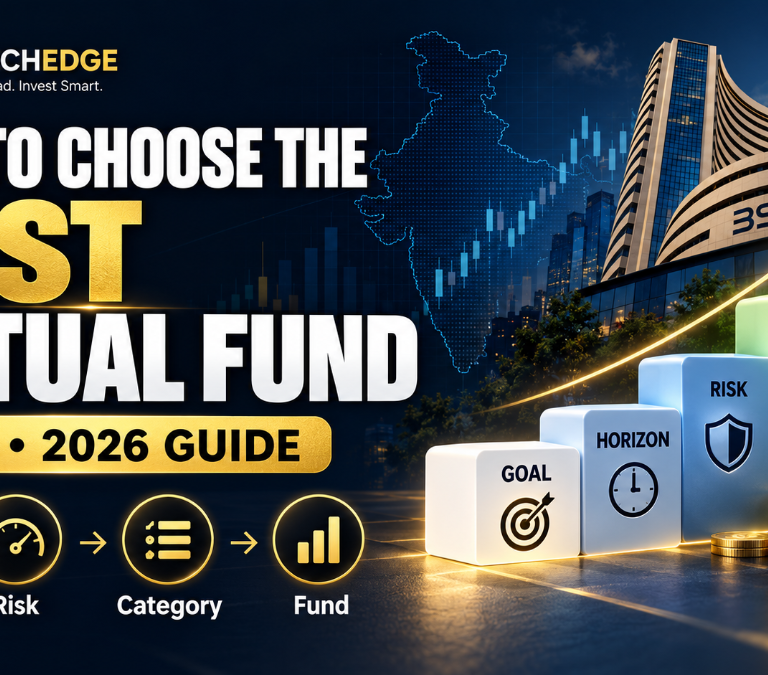
Goal → Risk → Asset Allocation → Investment Selection → Review
Following a structured process can help investors avoid emotional decisions and keep their investments aligned with long-term financial objectives.
Disclaimer: This article is for educational purposes only and is not personalised financial or investment advice.
This article is for educational and informational purposes only and does not constitute investment advice, trading advice or a recommendation to buy or sell any security.
Our content is written for educational purposes and focuses on clarity, evidence, risk awareness and practical decision-making.